
Local Experiences
Aleppo Old City Day: How to Plan a Heritage-Focused Route
Plan a focused day of looking closely: use the Citadel to orient yourself, choose a manageable market section, and leave time for a courtyard, a meal, and a clear way back.
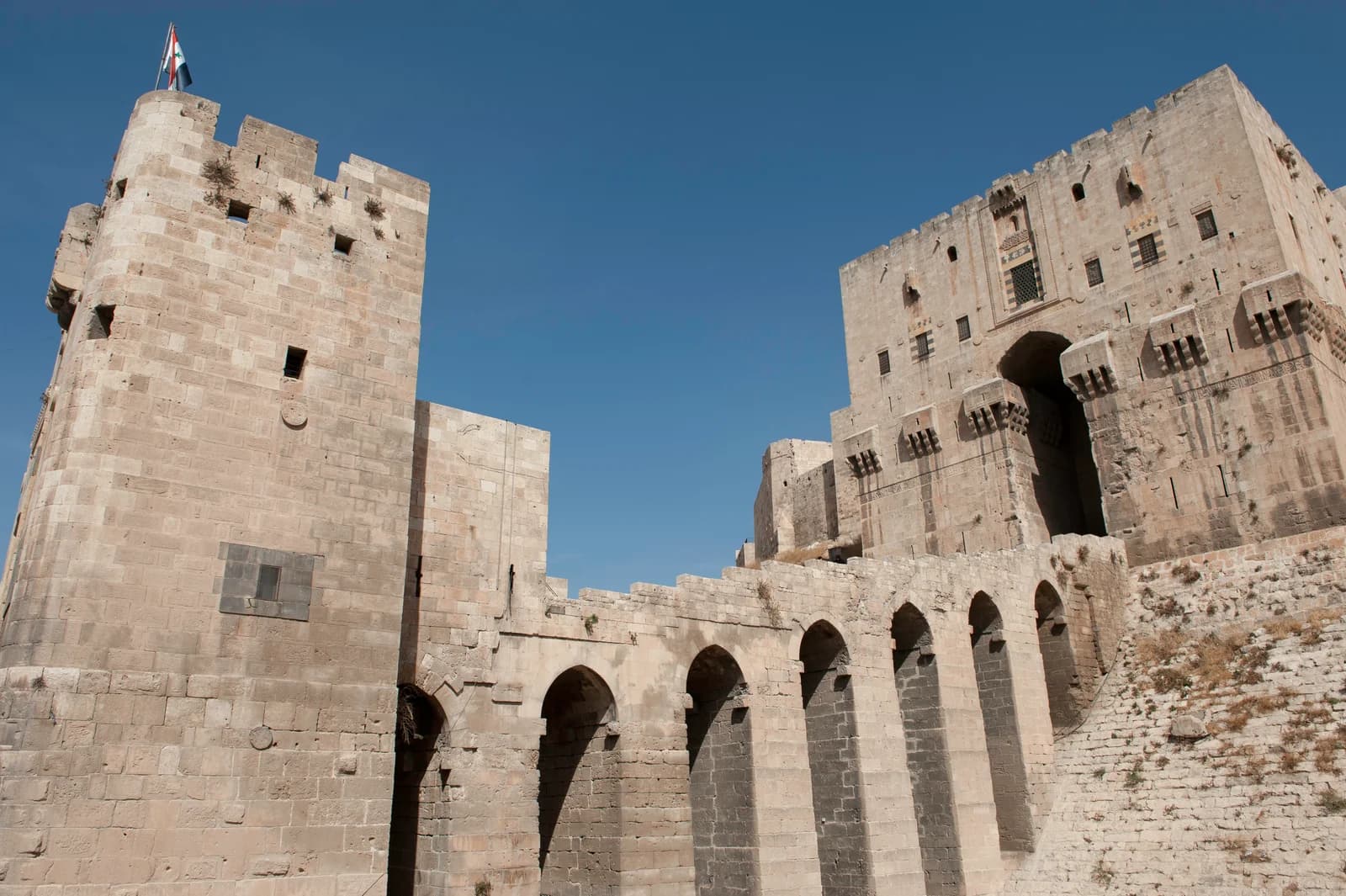
For one heritage-focused day in Aleppo, choose a Citadel viewpoint or visit, one manageable section of the historic souqs, and one optional courtyard or religious-building stop. Put a seated meal between the longer visits and decide where the day ends before you begin. This Aleppo Old City guide helps you build that small route around what is accessible on your dates.
The focus is the old city's buildings and the spaces between them. For a second day in Al-Jdayde, music, or crafts, use the Aleppo cultural weekend itinerary. Start with the Aleppo destination overview if you are still deciding how the city fits into your trip. Confirm current travel conditions and visitor access before committing to any visit.
All four photographs are archival, not evidence of current conditions. Hero: Citadel entrance, 27 September 2010, by Dosseman on Wikimedia Commons. It is resized and converted to WebP, and remains under CC BY-SA 4.0. Supporting-image credits and source links appear alongside the photographs and below the article.
An Aleppo Old City guide in four decisions
Set the scope before drawing a line on a map. First, choose whether the Citadel is your main interior visit or a reference point seen from a permitted public location. Second, select a particular market section rather than aiming to cover the entire souq. Third, decide whether a khan or the Great Mosque is the optional addition. Finally, agree on an ending point everyone can identify.
These decisions produce a sequence of places to confirm, not a turn-by-turn walking route. A line between two pins does not establish a usable entrance or passage. Ask about the actual connection, any restrictions, and the walking demands. Keep an exterior-only or shorter version ready if the preferred interior cannot be visited.
For a first visit, one question can hold the whole day together: how did movement through gateways, markets, and courtyards shape daily life? That gives your Aleppo itinerary a purpose even when you see fewer buildings than expected.
Start with the Citadel as your reference point
The Citadel helps explain the scale of the old city. UNESCO's Ancient City of Aleppo description identifies its fortifications alongside the markets, religious buildings, residences, khans, and baths that form the historic urban fabric. The entrance bridge and gateways offer a useful architectural question: how is movement channelled from the city towards the fortified enclosure?
From an authorised viewpoint, look at the relationship between the bridge, the slope, and the entrance rather than trying to identify every building. If you have confirmed an interior visit, give it the first substantial block of the day and reduce the later market plan accordingly. An interior and a quick exterior look should not occupy the same space in your schedule.
Follow the market's shape, then choose one khan
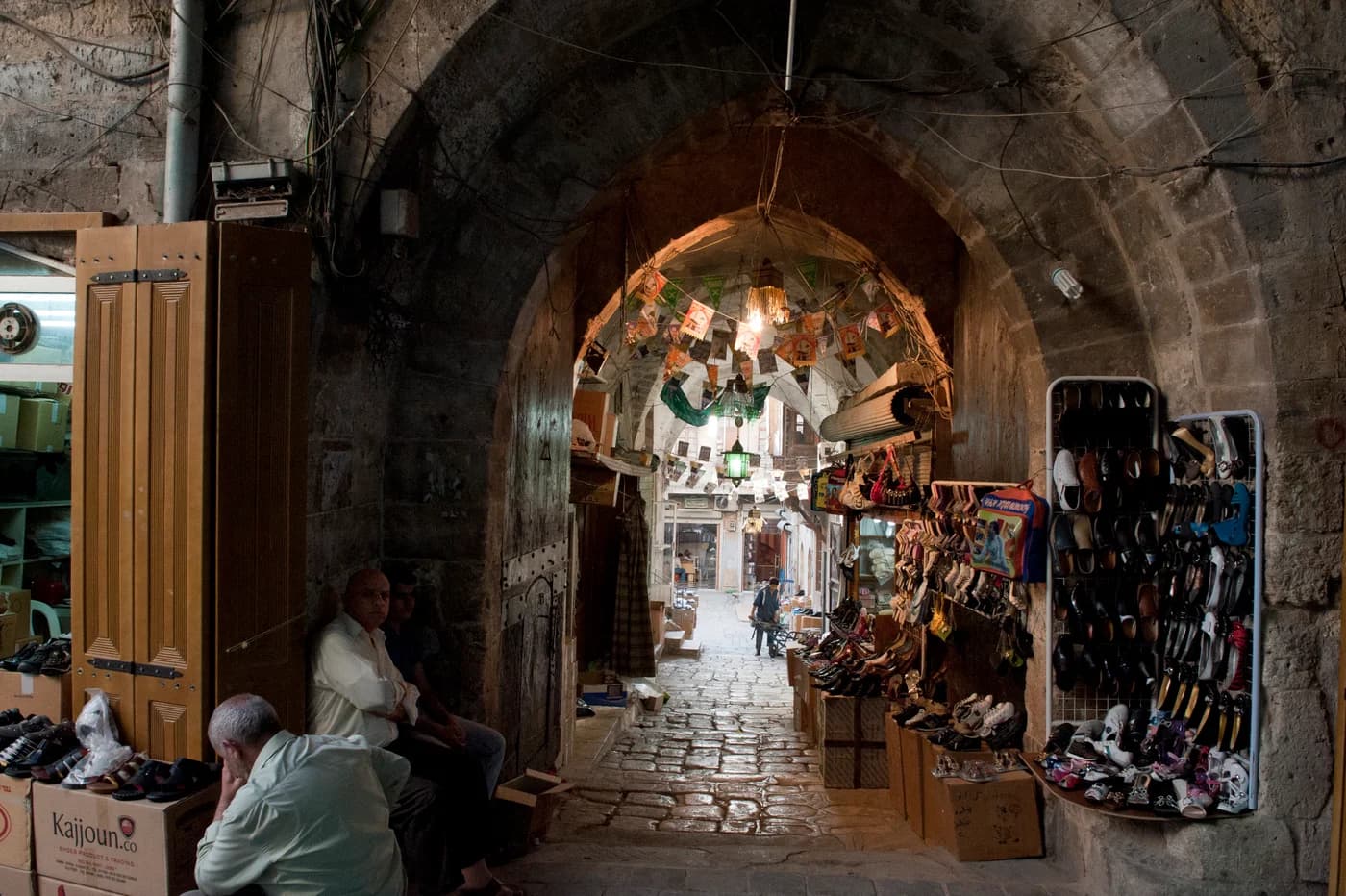
Give the market visit a beginning and an end. Identify one currently accessible section of Al-Madina Souq and establish how you will leave it. Within that small area, notice the proportions of the passage, changes in the roof, the rhythm of entrances, and how shopfronts meet the shared walkway. You can appreciate these details without making the day a shopping circuit.
Pause where you will not obstruct trade or deliveries. Ask before photographing a person, shop interior, or goods arranged for sale. When a seller welcomes conversation, a question about the building or a familiar detail may be more rewarding than another photograph. A working shop is someone's workplace, so let their availability set the length of the exchange.
A khan provides a different architectural focus: an entrance that leads towards an enclosed commercial courtyard. Khan al-Wazir is one named example to research when choosing between Aleppo heritage sites. The archival photograph below shows its entrance; it does not establish permission to enter or a continuous route from your chosen market section. Confirm those separately before adding it.
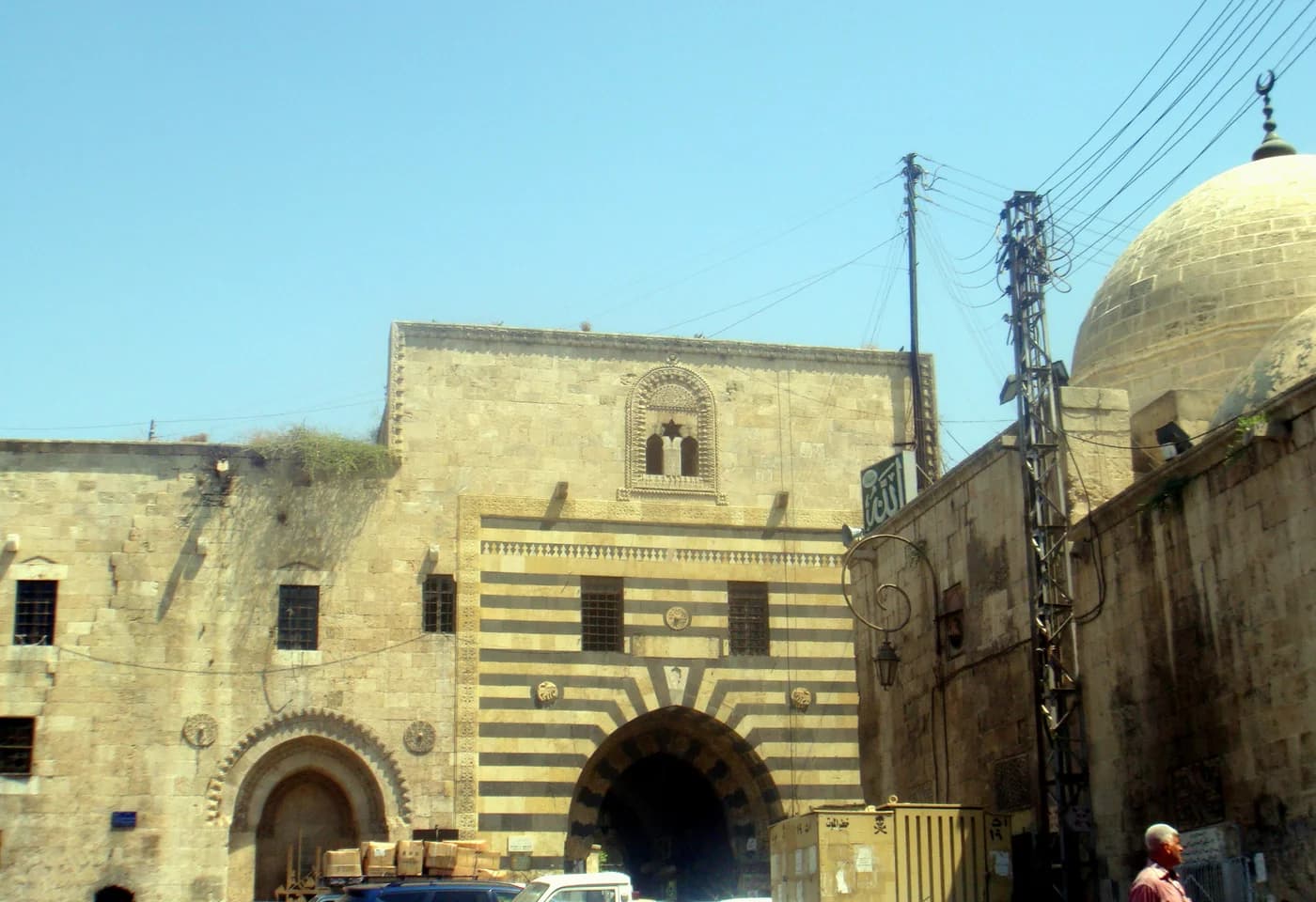
If entry is permitted, look at how the courtyard changes the light, sense of enclosure, and relationship between doors. If it is unavailable, keep the confirmed exterior stop or remove it. Avoid adding a second khan simply to fill the gap: the aim is to understand one example, with enough time to look closely.
Give the Great Mosque a separate decision
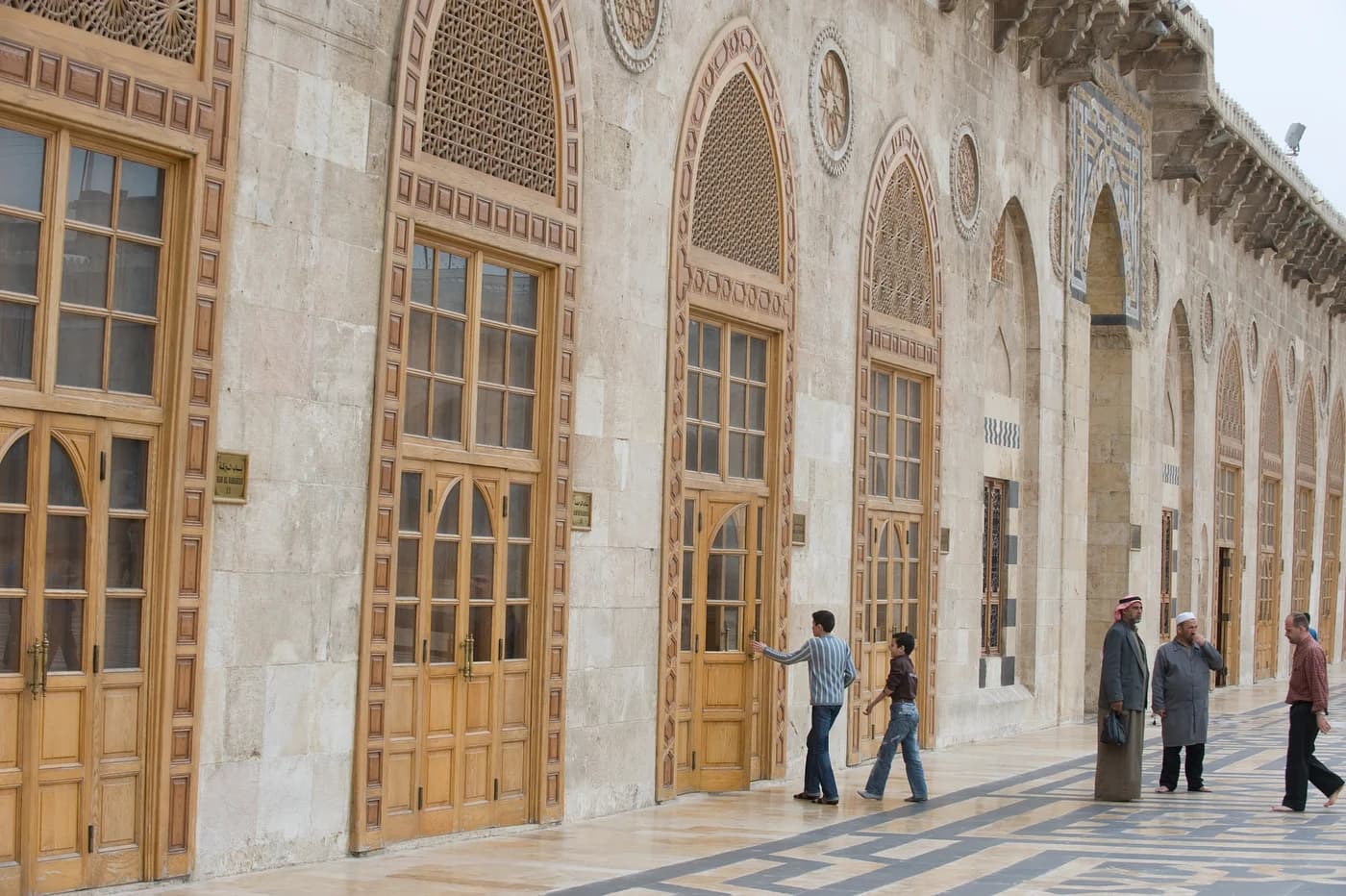
The Great Mosque belongs to the old city's heritage, but a religious-building visit needs its own arrangements. Check whether visitors can enter, which areas are accessible, and what the responsible custodian requires for timing, clothing, and photography. Do not translate historical importance into an assumption of tourist access.
If a visit is confirmed, make it the day's optional architectural stop rather than automatically adding it after a full Citadel visit and a long market walk. Focus on the relationship between the courtyard, arcades, and entrances, and follow directions around worship or restricted areas. The photograph offers historical context for those forms, not a preview of what you will find today.
Build breaks and an exit into the route
Among the things to do in Aleppo, a proper pause deserves a place in the plan. Choose a meal stop that fits the confirmed route and check its opening arrangements and dietary options directly. Avoid promising your group a particular restaurant from an old photograph or review. Keep a second acceptable option, or finish the sightseeing before the meal.
- Before leaving: save the confirmed meeting point, the places you intend to visit, and the route back to your accommodation.
- After the main visit: reassess energy and walking comfort before committing to the next section.
- At the meal break: choose either the optional stop or an earlier finish; do not treat both as obligations.
- Before the final stop: check that the onward connection still fits your return arrangements and any departure commitment.
This approach is especially useful when arrival or checkout falls on the same day. Use the holiday-rental booking checklist to resolve luggage, arrival, and departure questions separately. Neither a heritage route nor a room reservation establishes luggage storage, transport, or early access to the accommodation.
Choose a base that supports the day
Accommodation belongs in Aleppo travel planning once you know where the day starts and ends. Compare the property's published address and map with those two points, then confirm the actual entrance and return arrangements. A straight-line distance cannot tell you whether the journey suits your group. The guide to choosing a stay in Aleppo covers the wider area and stay-type decisions.
Browse published stays on ShamStay using your dates and guest count, and check the location and details of each result. This guide does not establish available Aleppo inventory, a nightly price, or any property's facilities. If essential booking information is unclear, contact ShamStay support before confirming. A useful base supports the day you have planned and gives everyone somewhere suitable to return to afterwards.
Practical answers
Frequently asked questions
Can I combine the Citadel, souq, and Great Mosque in one day?
Possibly, once access and connections are confirmed, but make only one the substantial visit. Pair it with a shorter market section and keep the third optional. A full Citadel interior visit may leave less useful time for the other stops than an exterior view would.
Is this a turn-by-turn Aleppo Old City walking route?
No. It is a framework for choosing a small set of heritage stops. Confirm the usable entrances and connections for your dates before following a route. A historic map or a line between landmarks does not verify a permitted passage.
How should I choose between a khan and the Great Mosque?
Choose a khan if the relationship between trade, gateways, and courtyards interests you most. Choose the mosque if religious architecture is your priority and visitor arrangements are confirmed. You do not need both to give the day a clear heritage theme.
Do the photographs show what I will see on my visit?
They show documented views from 2009 and 2010. They help explain architectural details, but they do not establish present appearance, restoration progress, or visitor access. Use current information from the responsible site or custodian when planning the visit.
Source note
This guide uses the following source for its limited external context. Availability, property details, and booking terms come from live ShamStay pages.
- UNESCO World Heritage Centre — Ancient City of Aleppo
- Citadel entrance photograph — Dosseman, 27 September 2010, CC BY-SA 4.0
- Aleppo souq photograph — Dosseman, 29 September 2010, CC BY-SA 4.0
- Khan al-Wazir photograph — Preacher lad, 10 August 2010, CC BY-SA 4.0
- Great Mosque courtyard photograph — Dosseman, 8 April 2009, CC BY-SA 4.0
- Creative Commons Attribution-ShareAlike 4.0 — licence for all four photographs and their WebP versions
Stays in Aleppo · Neighbourhood notes for Aleppo · Aleppo travel guide
Which published stays can you compare for Aleppo?
These are currently published listings. Open one for the photos, guest capacity, amenities, and the total shown for your dates. A published listing is not a vacant date.
- four seasons hotelAleppo Governorate, Syria
- Aziziyeh Grand Hotel RoomsAziziyeh, Aleppo
- Citadel Heritage HotelAl-Jdayde, Aleppo
- Jdayde Arches GuesthouseAl-Jdayde, Aleppo
- Bab Qinnasrin Citadel HouseBab Qinnasrin, Aleppo
- Al-Furqan Cosy Private RoomAl-Furqan, Aleppo