
Destination Guides
Where to Stay in Aleppo: Best Areas and Stay Types for First-Time Visitors
Choose an Aleppo base by matching location context, arrival practicalities, sleeping needs, and stay type to the trip you are actually planning.

If you are deciding where to stay in Aleppo, begin with the journeys the group will repeat rather than a universal list of neighbourhoods. A setting connected to heritage plans can suit one first visit, while a base aligned with family, work, an event, or a longer daily routine can suit another. The strongest choice is the current property whose public location context, arrival process, sleeping layout, and rules support the same trip.
Use this guide to organise the decision, not as proof that a particular property or city area is available. Start from ShamStay’s general live inventory and inspect each result individually; do not assume that a destination guide proves city-specific supply. Verify changing local conditions, routes, and access through appropriate current sources close to travel.
Where should I stay in Aleppo?
Choose a location around the family address, work site or other destination you expect to visit most often, then confirm the actual entrance and route with the host. An area name or this guide cannot establish travel time, building access or accommodation availability for your dates.
- Name the first destination after check-in and the place you expect to revisit most.
- Separate fixed commitments from activities that can move to another day.
- List the arrival, luggage, stairs, privacy, and sleeping needs that cannot be improvised.
- Decide whether the accommodation is mainly a base or an important part of the daily experience.
- Keep the dates and complete guest count fixed while comparing live options.
Build the location choice around three anchors
A useful first-time shortlist balances three anchors: the places you need to reach, the practical arrival route, and the needs of the people travelling. Score each candidate against the same anchors instead of changing priorities when a photograph or property label looks appealing. This keeps the decision grounded even when two stays offer very different settings.
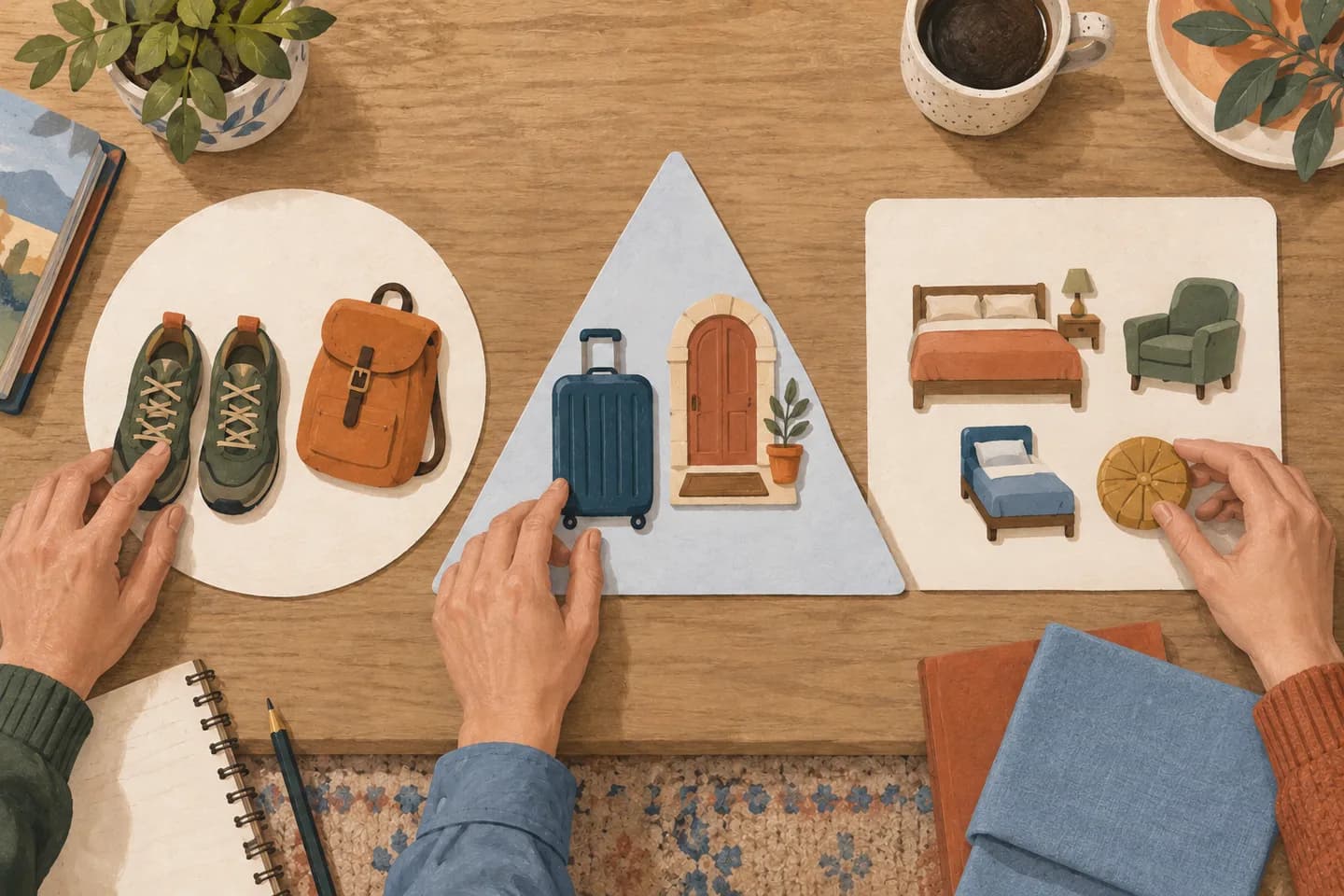
For daily plans, use specific destinations rather than a general desire to be central. For arrival, consider the information you still need about the final approach, entrance, floor, stairs, and luggage. For the party, count real beds, bathrooms, private rooms, common space, and any mobility requirement. The best area to stay in Aleppo is the one that performs well across the anchors that matter to this trip—not the area with the most recognisable name.
Compare broad city settings without ranking them
UNESCO describes the Ancient City of Aleppo as a cohesive historic urban fabric shaped by the Citadel, religious buildings, markets, khans, baths, residences, streets, and lanes. That heritage context can be meaningful to a visitor, but it does not establish current attraction access, walking conditions, transport, or the fit of a particular home. Treat heritage proximity as one trip preference to investigate, not a guarantee attached to an accommodation label.
Heritage-oriented setting
Consider it for: A trip where the historic urban context is meant to shape mornings, evenings, and the pace of exploration.
Verify: Confirm the real public location, final arrival route, entrance, stairs, luggage plan, and current access information independently.
Connected city setting
Consider it for: A mixed itinerary that needs a workable relationship between several appointments or areas rather than one main focus.
Verify: Test the approximate location against the group’s actual destinations; a central description alone does not establish journey time.
Residential routine
Consider it for: Family, work, or longer visits where everyday space and proximity to a specific personal destination lead the decision.
Verify: Check the property’s public area, house rules, services explicitly listed, and the route to anything the group will revisit.
A location can combine elements of more than one setting. Use the listing’s current description and approximate map to understand it, then ask one focused question if an essential relationship remains unclear. Do not infer a private address, travel time, view, or neighbourhood character from this guide.
Match the stay type to the hours spent inside
When comparing Aleppo accommodation, estimate how the group will use the property from waking to bedtime. A compact room can be enough for a solo traveller who needs a clear place to sleep. An apartment can support a longer indoor routine when its actual kitchen, seating, workspace, and privacy details match the plan. A larger home can help a group only when the bedroom relationships and common areas solve real needs.
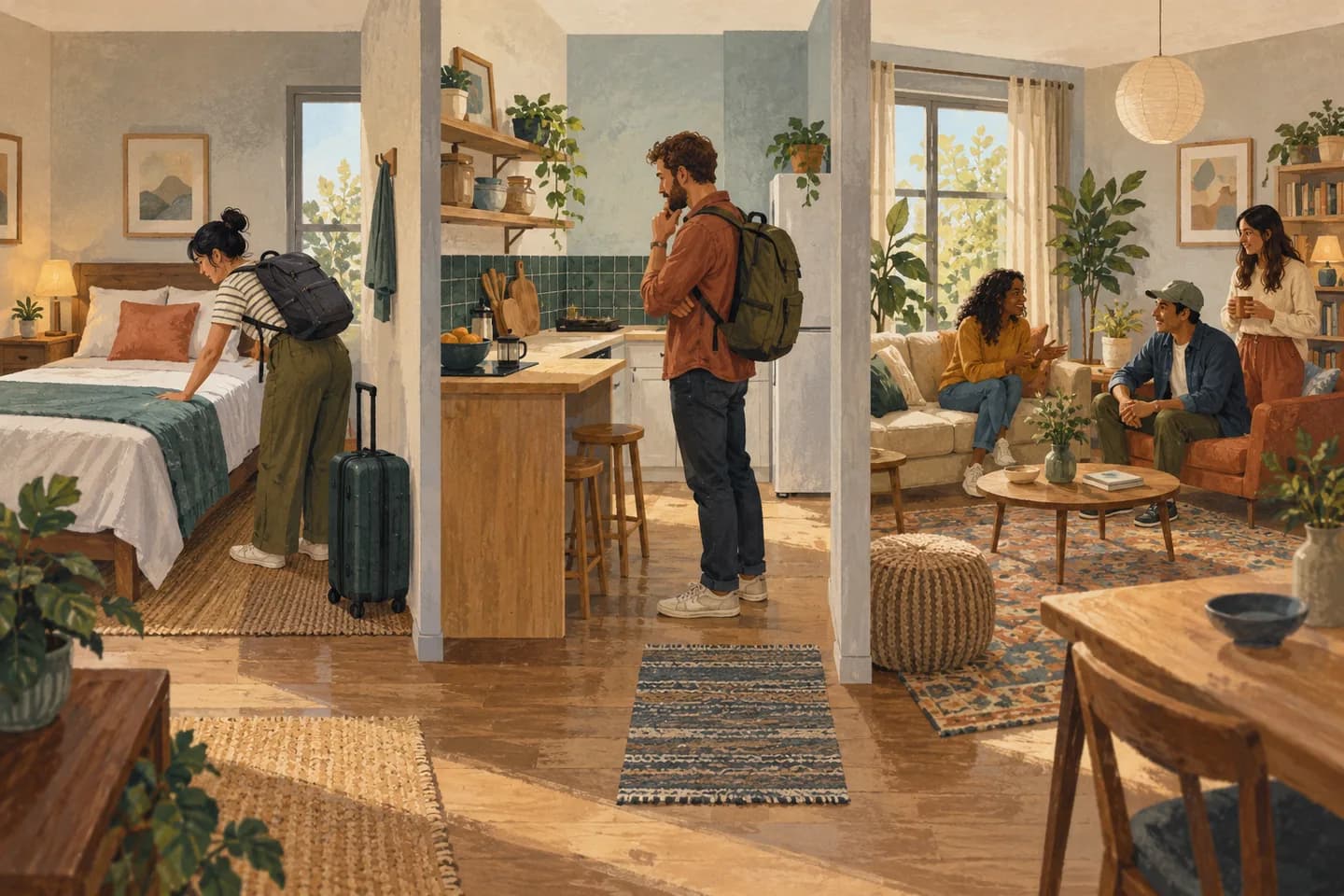
An Aleppo vacation rental should be evaluated from the live property page, not from the category name. Distinguish a permanent bed from other sleeping arrangements, private space from shared space, and stated amenities from assumptions. The vacation-rental versus hotel guide helps compare service and privacy expectations, while the apartment-versus-villa family guide focuses on room relationships and shared routines.
Walk through the property from arrival to bedtime
A short stay in Aleppo leaves less time to solve preventable mismatches. Read the listing as a sequence: reaching the agreed arrival point, entering with luggage, moving between levels, finding the bathroom and sleeping spaces, using any essential facility, and following the departure instructions. One unclear step can matter more than several optional features.
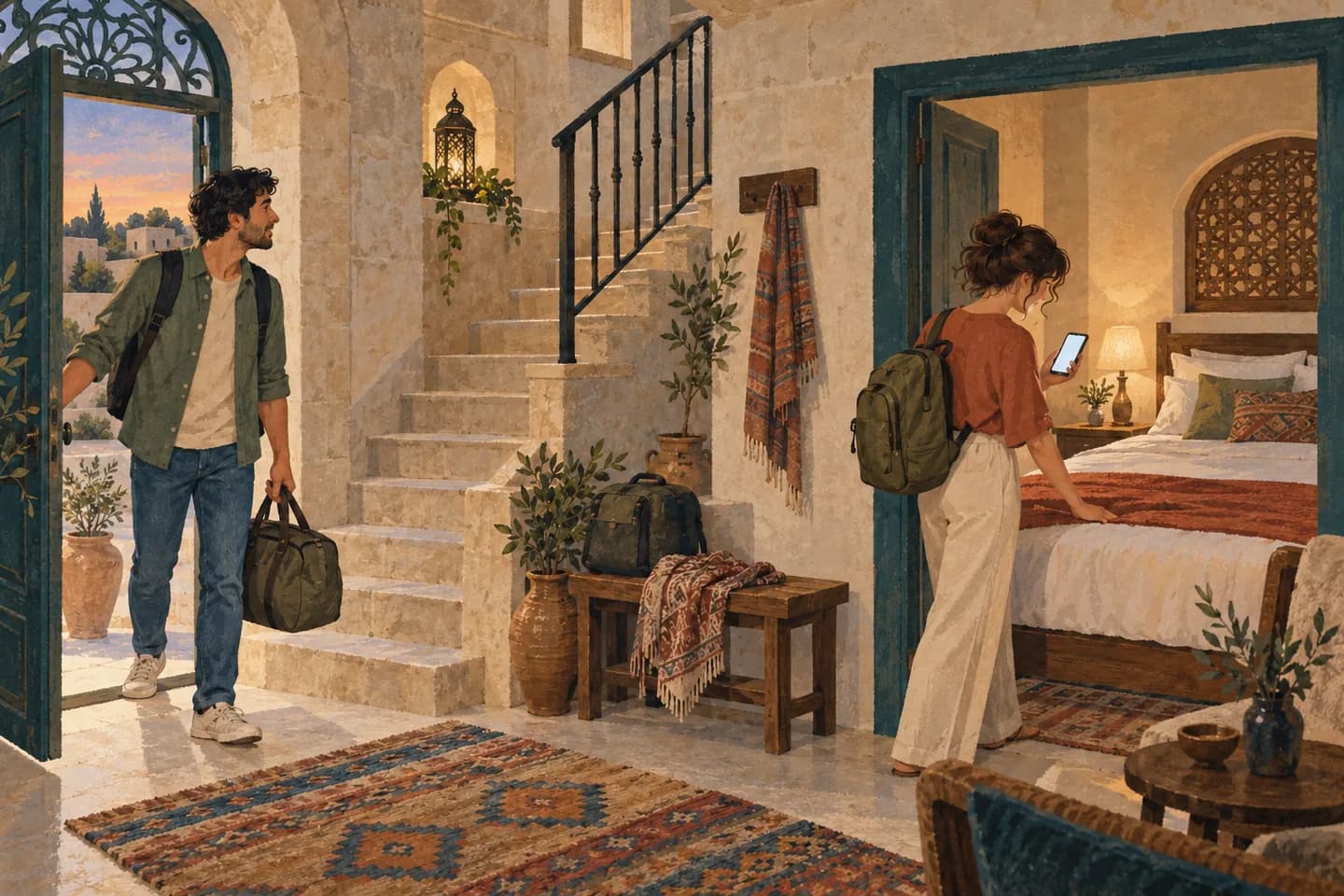
- Arrival: meeting or entry instructions, timing, and what happens if the journey changes.
- Access: entrance, floor, stairs or lift information where relevant, thresholds, and bathroom route.
- Luggage: the last approach to the property and where bags can sit without blocking the routine.
- Sleep: real beds, bedroom doors, shared areas, and the rules that shape quiet time.
- Departure: check-out instructions and the plan for luggage at the required time.
The first-time guest booking checklist covers account, date, availability, checkout, and status steps. The ShamStay pilot guide explains approximate public locations, private arrival details, and why a booking should be treated as confirmed only when its recorded status says so.
Make the final shortlist from current listings
Open all currently published stays with the intended dates and full guest count. Only treat an option as Aleppo inventory when its live property record identifies that location and the property appears for the relevant search. An illustration, fixture, saved item, or earlier result is not evidence of present availability.
- Compare the same dates, guest count, and non-negotiable needs across every finalist.
- Review public location context, photos, capacity, rooms, amenities, rules, cancellation information, and the full quote.
- Resolve an essential missing detail in platform messaging before submitting a booking action.
- Recheck the property, dates, guests, currency, total, and recorded status after any interruption or change.
You can also use ShamStay Explore to review published options across destinations. If no current stay matches the trip, change a flexible preference or date rather than assuming unpublished supply exists. If a listing, message, or booking instruction appears inconsistent, pause and contact ShamStay support.
Practical answers
Frequently asked questions
Which Aleppo location setting suits a first visit?
Choose the setting that supports the trip’s repeated destinations, arrival needs, and preferred daily rhythm. A heritage-oriented location can fit one itinerary, while a connected or residential base may fit another. Compare the real public location and property details rather than relying on an area label alone.
Should heritage plans decide the whole booking?
No. Heritage context may be an important preference, but the property must still fit the party’s access, sleeping, privacy, and practical needs. Verify current attraction and route conditions separately because an accommodation listing cannot establish them.
What access details matter most for a short visit?
Confirm the final arrival process, luggage route, entrance, floor, stairs or lift information where relevant, bathroom access, and departure plan. Ask about a missing essential detail instead of inferring it from photographs or a broad location description.
Where can I check whether an Aleppo stay is currently published?
Use ShamStay’s live general stays or Explore pages and inspect each property’s current location record. Enter the real dates and guest count, then rely on the live listing and recorded booking status rather than this guide for availability.
Source note
This guide uses the following source for its limited external context. Availability, property details, and booking terms come from live ShamStay pages.
Stays in Aleppo · Neighbourhood notes for Aleppo · Aleppo travel guide
Which published stays can you compare for Aleppo?
These are currently published listings. Open one for the photos, guest capacity, amenities, and the total shown for your dates. A published listing is not a vacant date.
- four seasons hotelAleppo Governorate, Syria
- Aziziyeh Grand Hotel RoomsAziziyeh, Aleppo
- Citadel Heritage HotelAl-Jdayde, Aleppo
- Jdayde Arches GuesthouseAl-Jdayde, Aleppo
- Bab Qinnasrin Citadel HouseBab Qinnasrin, Aleppo
- Al-Furqan Cosy Private RoomAl-Furqan, Aleppo