
Stay Inspiration
Group Trip to Syria: Apartment, Villa or Multiple Units?
Compare one shared property with several units by room allocation, gathering space, independence, complete costs, and the booking details the group must coordinate.
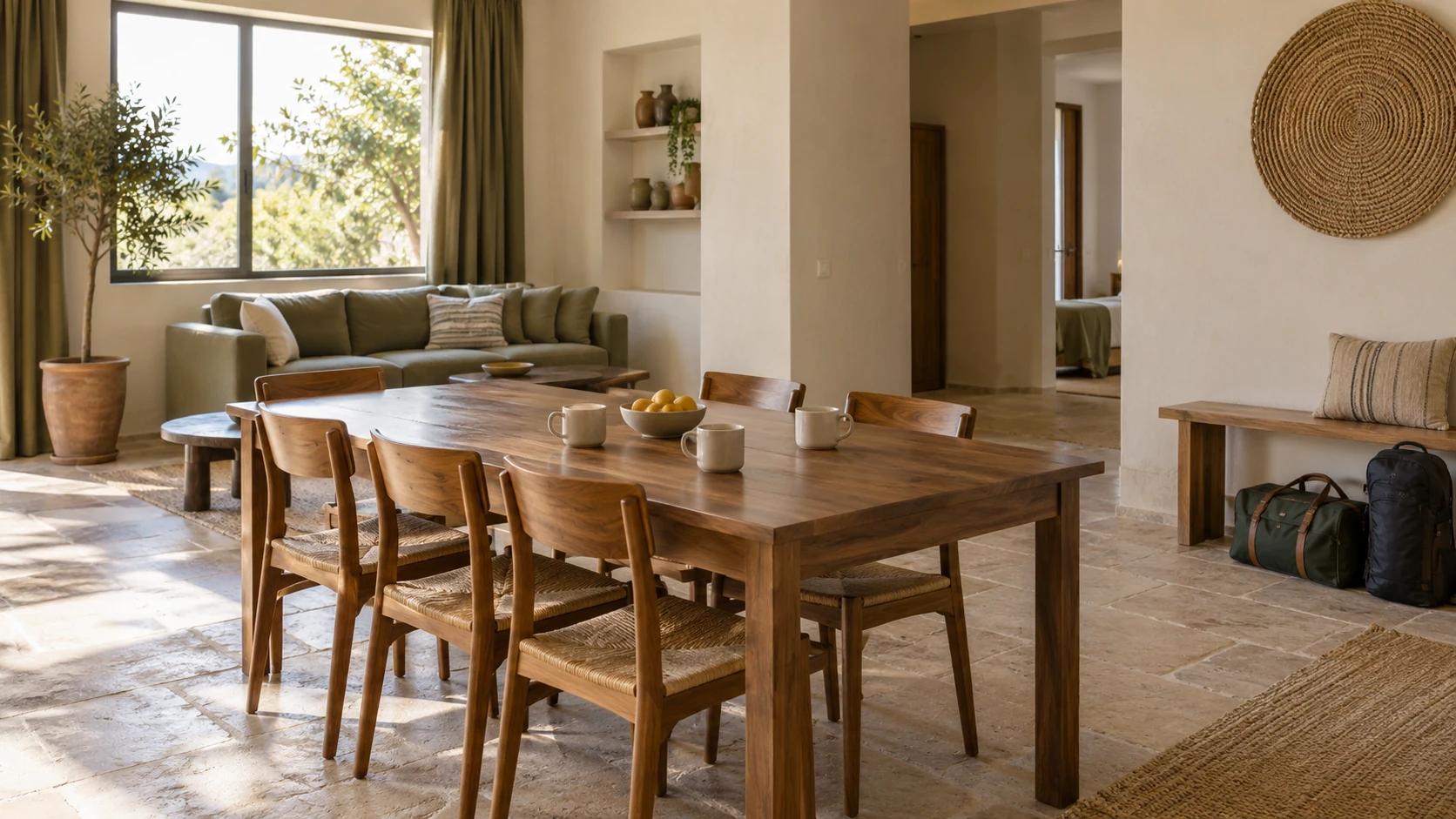
Choose group accommodation in Syria by deciding which parts of the trip need to happen together. One apartment can keep a group on a shared daily routine. A villa can be useful when its actual layout combines separate rooms with places to gather. Multiple units can give different households or friends more independence, but they also create separate availability, arrival, and booking details to coordinate.
The best arrangement is the one that fits the people and can be confirmed as a complete plan. This guide compares one shared property with several units; it does not assume that nearby listings are connected, that a large home permits gatherings, or that separate requests become one group reservation.
Image note: all four photographs are AI-generated photorealistic editorial images of fictional interiors. They do not show real ShamStay properties, verified room relationships, guest capacities, or available combinations of units.
If your shortlist includes rooms as well as whole homes, use the apartment, guesthouse, and villa comparison to check booked boundaries, services, and rules.
Group accommodation in Syria: decide what must be shared
Start with a room-allocation list rather than a property category. Count every traveller, identify who can share a bedroom, and record each person's actual arrival and departure dates. Then separate the moments when everyone needs to be together from those when independence would help. Sleeping under one roof is only one way to organise a group trip.
- Sleeping: assign each person to a permitted bed and identify the rooms that must be private.
- Gathering: decide whether the whole party needs to eat, sit, or prepare for an outing in one place.
- Different routines: note early departures, late returns, work calls, or daytime rest that could conflict.
- Access: record the entrance and bathroom needs that every proposed arrangement must satisfy.
For a party with children or relatives needing particular arrangements, the family stay-type guide explores those needs in more detail. Keep the group decision focused on whether one property or several can support the agreed plan without inventing beds, shared facilities, or permissions.
Choose one apartment when the group benefits from a common routine
A large apartment in Syria can be a practical option when the party wants one place for breakfast, a shared departure point, and an easy way to regroup. It can also reduce the number of separate entrances and arrival arrangements to manage. Those benefits depend on the apartment's documented layout, not on how spacious the main room looks in one photograph.
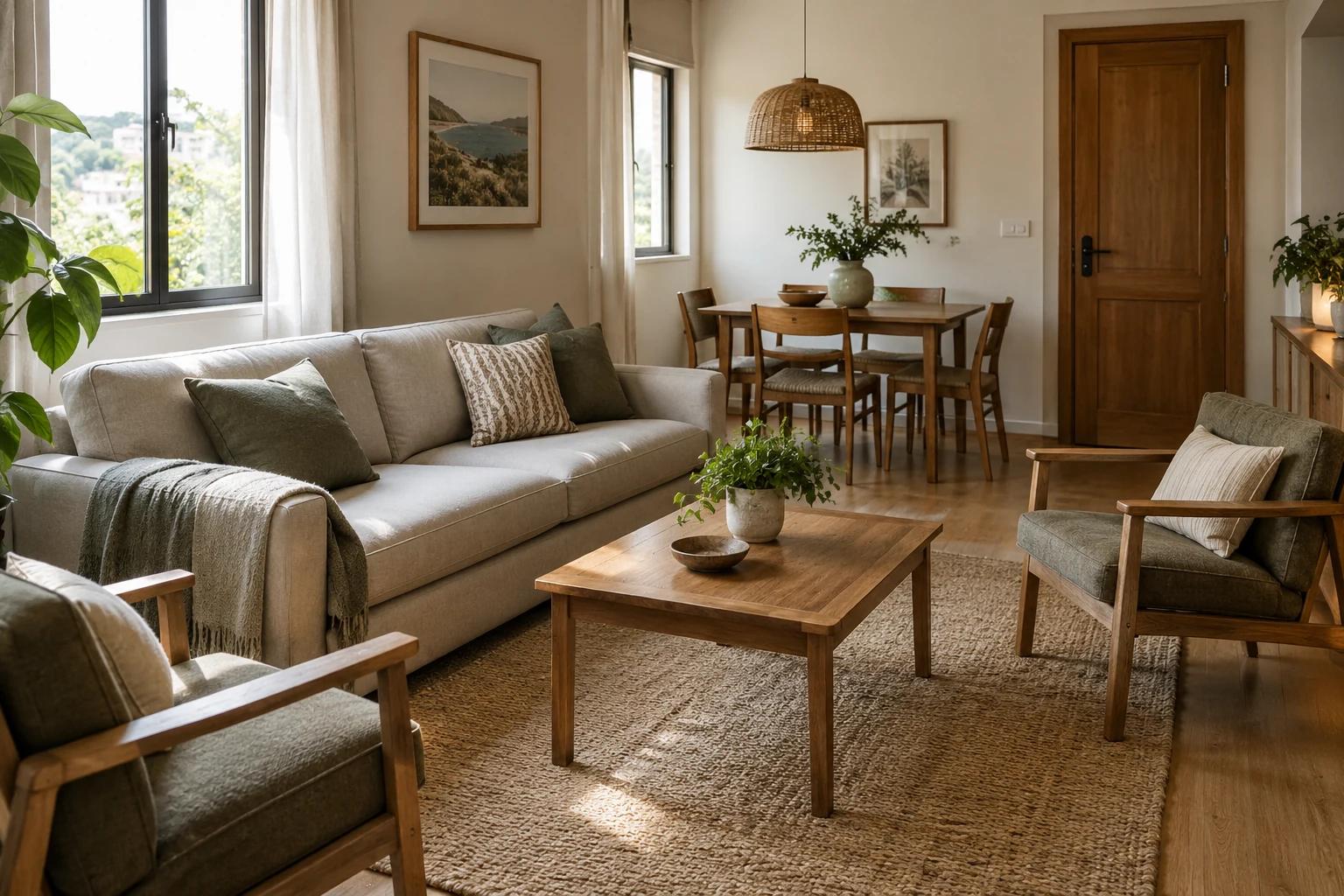
Check the pressure points: bathrooms during the morning, seating when everyone returns, and the relationship between sleeping rooms and the kitchen. If a listed sofa bed occupies the only living area, using it may remove the group's evening meeting space. Count the space twice only when the actual routine allows those uses at different times.
A single apartment is less convincing when one household wants quiet while others need the same room for conversation, calls, or meals. In that situation, a larger total floor area may not solve the issue. Look for real separation or revisit the idea of more than one unit.
Consider a villa when separate rooms support shared time
When considering a villa for a group in Syria, ask what the extra space lets the party do. Separate bedrooms, a usable dining area, and a distinct sitting room can support different bedtimes while preserving a place to meet. Verify each feature in the current listing; the villa label does not establish a bathroom count, garden, parking space, or private access.
Review how rooms connect, including stairs and the route to bathrooms. A bedroom reached through another sleeping room may change the allocation. A large dining table is useful only if the listed space and rules permit the intended use. Check any visitor, noise, or gathering restrictions rather than treating a whole-home booking as permission for an event.
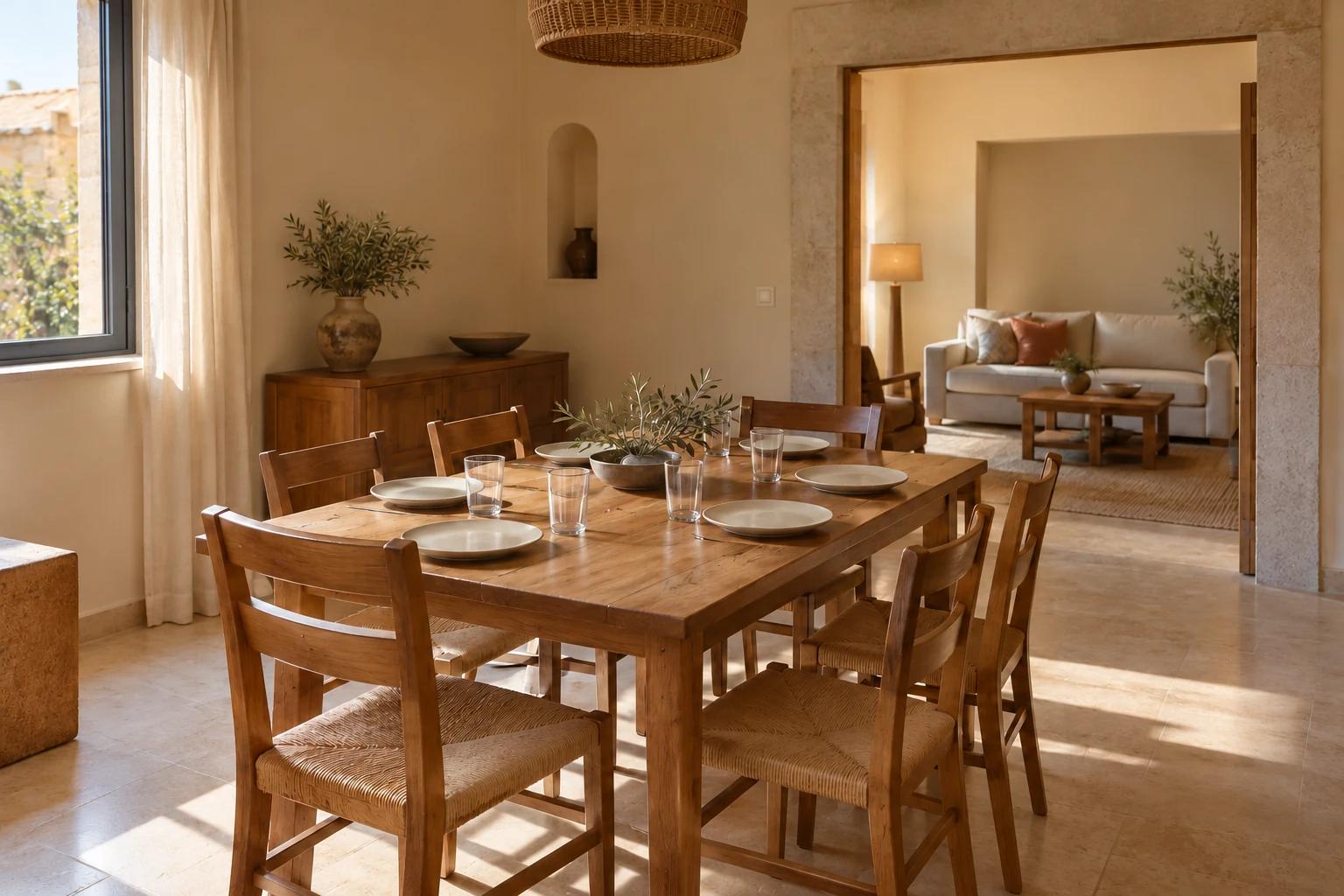
The apartment-or-villa family comparison gives more detail on household layouts. For a wider group, also agree how shared rooms will be used so no one books a bedroom expecting quiet beside the place everyone plans to gather late.
Use multiple units when independence solves a real problem
Multi-unit accommodation can suit friends or households with different sleeping, meal, or arrival routines. Each smaller party can have its own base while the wider group meets for selected activities. The trade-off is that shared time needs a workable meeting place and each unit must be suitable on its own.
- Confirm the relationship between the units: nearby map pins do not establish the same building, entrance, floor, or an easy route between them.
- Check each unit's capacity and allocate guests without counting anyone twice or leaving someone without a confirmed place.
- Identify where the whole group can meet, and verify permission if that means using one of the booked properties.
- Review each arrival arrangement independently, especially when smaller parties reach the destination at different times.
A saved shortlist is not a combined reservation. ShamStay's booking help explains that a submitted request is not confirmation. Follow the status attached to each booking, and do not tell the group that the whole arrangement is secured while part of it remains unresolved.
Compare the complete arrangement before dividing the cost
Compare one shared property with the complete set of separate units needed for the same party and dates. One unit's attractive total is not the total for the group. Use the accommodation cost comparison guide to record the current amounts, included charges, currency, and any separately shown refundable component consistently.
Then agree the group's own contribution arrangement before anyone commits. Different room privacy or different numbers of nights may matter to the people sharing the cost. Keep that agreement separate from the amounts owed under each actual booking, and check the payment and guest details required by the permitted booking process.
Review the terms for every option. The cancellation-policy reading guide helps identify the relevant timing and conditions. Separate units may have different policies, so a change in one person's plans does not establish the outcome for the rest. Do not assume the same refund or date-change conditions across several reservations.
Give the group one plan and check every reservation
Keep a simple coordination note with the intended guest allocation, dates, chosen property links, and who will follow each reservation through the permitted booking process. After booking, record the relevant references and status updates. Distinguish who is organising the group from who is responsible for an individual reservation; neither role changes the platform's account or guest requirements.
If a required relationship between units or a booking outcome is unclear, use ShamStay support before making further assumptions. Check the current terms before changing or cancelling an existing reservation. One unsuccessful request does not automatically undo another confirmed booking, and several open browser tabs do not hold a complete group arrangement.
To find a group vacation rental in Syria, browse published ShamStay stays using the real dates and guest count for each proposed booking. Keep only arrangements that satisfy the room allocation and shared-time plan. Recheck availability, the complete totals, rules, and recorded confirmation for every part before treating the accommodation decision as finished.
Practical answers
Frequently asked questions
Do two listings shown near each other mean we can stay next door?
No. Public location context does not prove adjacent doors, a shared entrance, or an easy route between units. Confirm the relationship that matters to your group before depending on proximity, and assess each property independently.
Can everyone gather for dinner in one of the smaller units?
Check the property's rules and permitted use before planning that. Sleeping capacity does not establish visitor or gathering permission, and a photographed dining area does not confirm seating or access for the whole party.
How should we handle different arrival and departure dates?
Record each traveller's dates first, then assign rooms or units and use the actual dates and guest counts required by each booking. Verify the relevant arrival arrangements and totals instead of copying one household's details into every reservation.
What if one unit is confirmed while another is still pending?
Treat the group arrangement as incomplete. Check each booking's saved status, assess the agreed fallback, and ask support about an unclear result. Review the terms before changing or cancelling anything; one booking's outcome does not determine the others.