
Guest Planning
Work-Friendly Stays: Wi-Fi, Workspace and Quiet-Hour Questions to Ask
Send a useful work brief before booking, then separate confirmed answers from assumptions about the connection, furniture, and room.
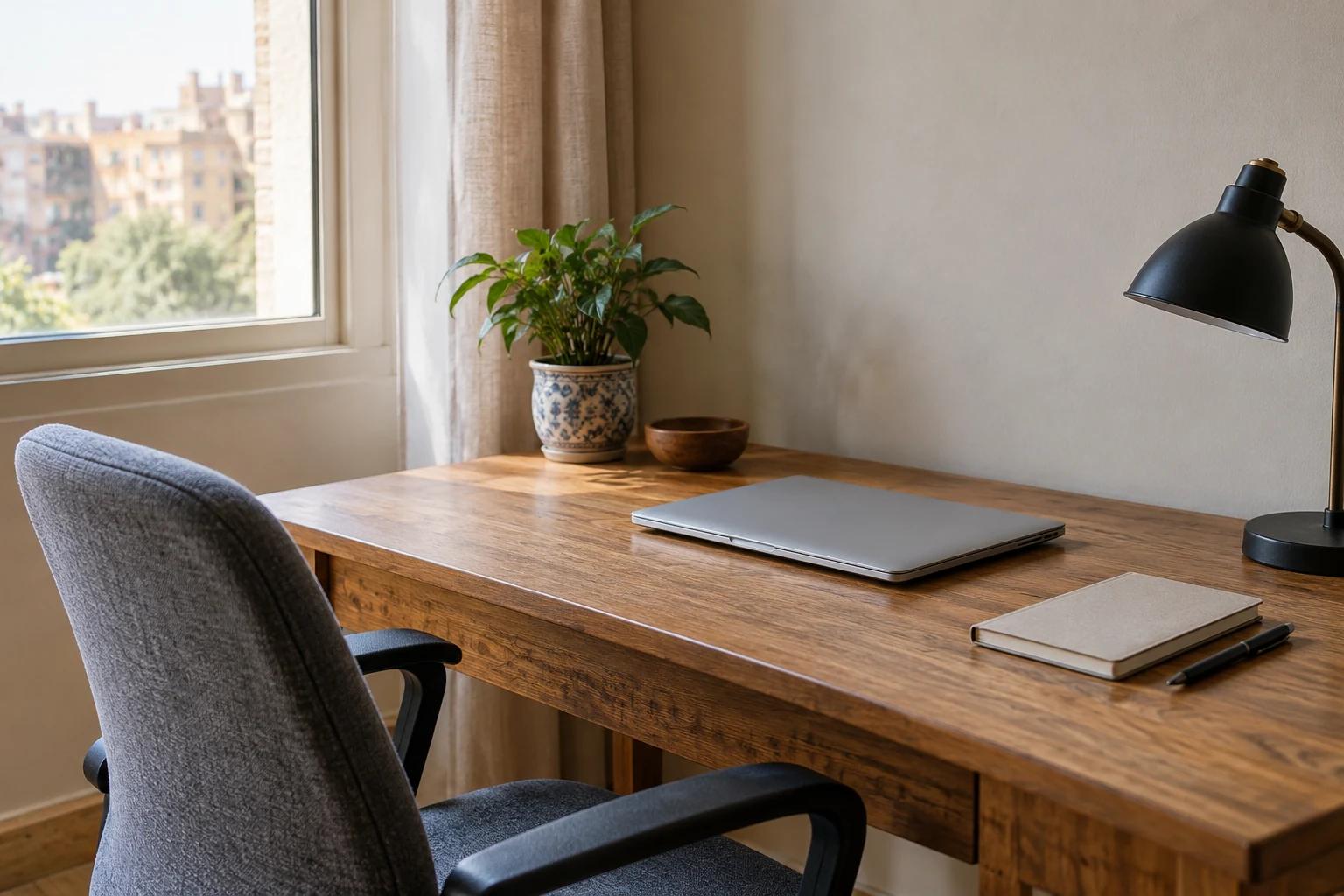
For work-friendly accommodation in Syria, ask for evidence about three separate things: the connection in your intended room, the furniture you will actually use, and the hours when your work could disturb or be disturbed by others. A Wi-Fi tick, a laptop in a photograph, or a promise of a quiet area cannot settle all three.
This is a pre-booking question sheet, rather than a guide to choosing a remote-work lifestyle. If you are still deciding between a compact apartment, an extra room, and a longer visit, start with the remote-worker stay ideas. Here, the job is to turn one promising listing into a decision you can defend.
All three images are reused AI-generated photorealistic editorial images of fictional interiors. They do not show a listed property, a tested connection, or guaranteed facilities.
Start with the tasks that would fail first
Write down what an ordinary working day involves before contacting anyone. A person editing documents offline has different needs from someone uploading video or hosting meetings. Include the local times of essential calls, whether you use a VPN or other required tools, and whether another guest will work at the same time. You do not need to disclose confidential client information or send account credentials.
- Name the tasks that require a live connection and the time window when they matter.
- List the equipment you will bring and the space it needs.
- Decide which interruption you can tolerate and which would make the stay unsuitable.
- Give the exact dates and full guest count when comparing available options.
For a remote work stay in Syria, keep essentials separate from preferences. An attractive balcony is a preference if you can work indoors. A usable connection during a scheduled assessment may be essential. This distinction helps you reject an unsuitable option before a scenic photograph changes the conversation.
Ask about the room, the test, and shared use
An apartment with Wi-Fi in Syria needs a more specific description when work depends on it. Ask where the router is, whether other units or guests share the service, whether there are usage limits, and what coverage is like at the intended desk. A test beside the router may say little about a room behind several walls.
If the host can provide a recent test, ask for the date, room, and approximate time. Consider the upload result and responsiveness alongside download speed. Treat every sample as evidence of that moment, not a service guarantee. Tell the host which tools matter rather than asking only whether the internet is “good”.
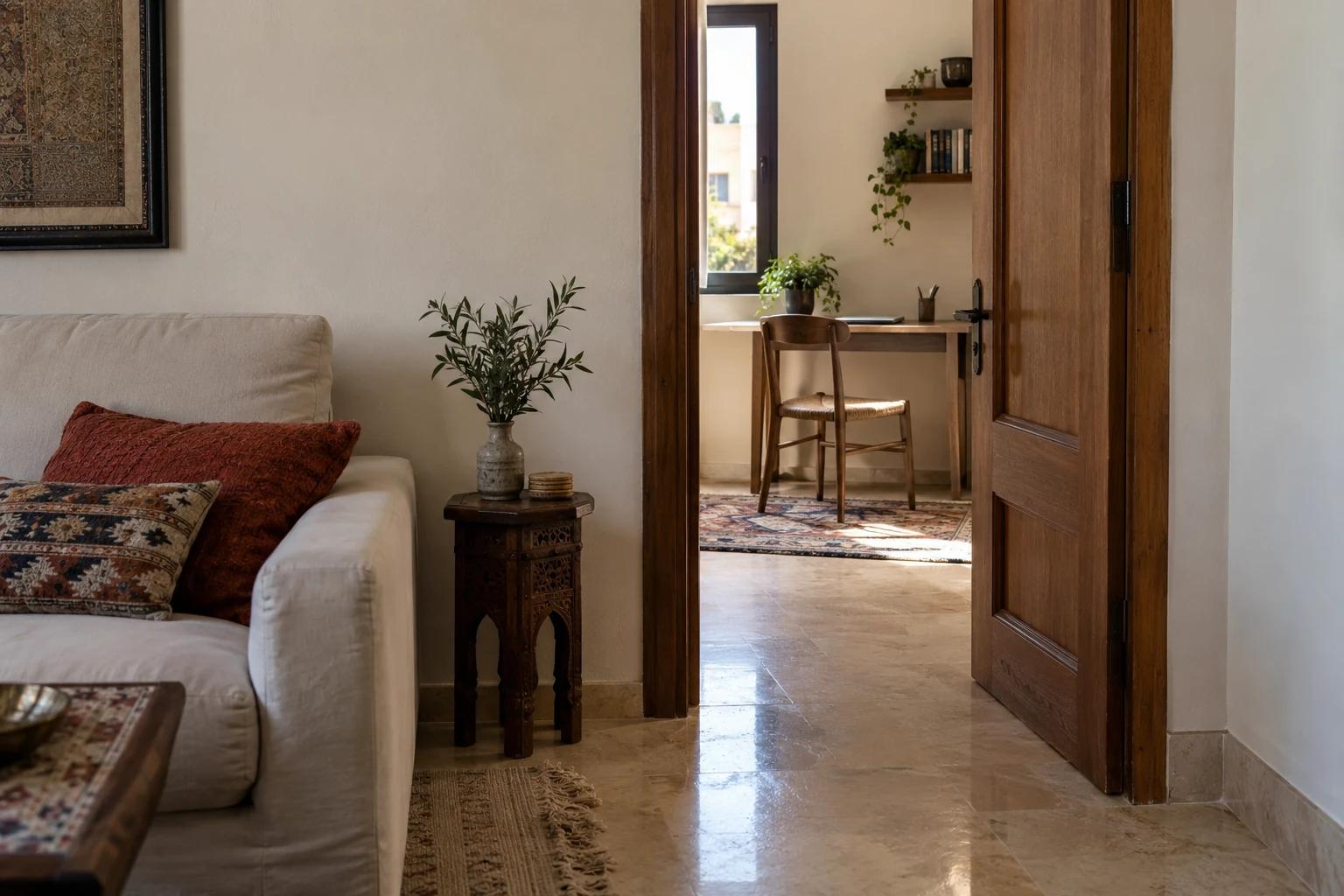
Ask separately about power arrangements. If backup is listed, clarify whether it powers the router, room sockets, lights, or only selected equipment, and what limitations apply. Do not assume a photograph of equipment establishes its operating time. Keep any alternative connection as a separately checked option, including device compatibility and current coverage.
Check the seat before judging the room
Workspace accommodation in Syria should be assessed at the scale of the furniture. Request a current photograph showing the desk surface, chair, surrounding space, and nearby sockets. If dimensions matter to your equipment, ask for measurements. A wide-angle room image can make a narrow shelf look more useful than it is.
Consider where your knees, screen, and keyboard would go, whether glare would affect the screen, and whether lighting suits the hours you expect to work. A dining table can be useful, but ask whether it is shared and whether your equipment must be cleared at every meal. A chair that looks comfortable in a photograph still needs your own judgement.
Use the apartment amenities checklist for the rest of the home. Work requirements do not replace checking beds, bathrooms, cooking equipment, or basic arrival arrangements. Confirmed amenities should come from the current listing and written replies, rather than from this editorial image.
Agree on call hours and household boundaries
Explain when you expect to speak on calls and ask about known noise sources near the actual room. Include shared corridors, communal areas, ongoing works the host knows about, and other occupants. “Quiet neighbourhood” is too broad to establish the conditions at a particular desk.
Check the house rules for quiet hours and visitor restrictions. Quiet hours may limit your own evening calls as well as noise from others. If two guests have overlapping meetings, identify two workable positions and the doors between them. A closed door can help separate activities, but it is not proof of sound insulation.
Make the booking decision from the replies
For a long-stay apartment in Syria, repeat the essentials in one short summary before committing. Record what is confirmed, what is qualified, and what remains unanswered. Compare the complete price and current cancellation terms alongside those answers. A longer booking does not automatically include cleaning, a discount, or permission to change dates.
If an unanswered point would decide your trip, keep comparing rather than treating silence as agreement. Plan what you would do if a critical session were interrupted, without assuming a nearby cafe or another apartment could become an office. Test your own equipment after arrival before an important call.
Browse the published stay directory using your dates and party, then use ShamStay support for platform or booking questions. Keep property-specific facilities in the listing conversation. The booking checklist explains why a request and a confirmed reservation are different steps.
Practical answers
Frequently asked questions
Is a screenshot of an internet speed test enough?
No. Ask when and where it was taken, whether the connection is shared, and whether the test reflects the room you intend to use. It is a sample, not a promise of future performance.
What if the only workspace is the dining table?
Confirm the surface, chair, lighting, socket access, and when others need the table. Decide whether clearing equipment for meals is practical for your working pattern.
Can I assume quiet hours mean silent days?
No. House rules and daytime noise are different questions. Ask about known conditions at the room and whether your own calls fit the permitted hours.
Should I send work passwords to help check the connection?
No. Describe the tools and connection needs without sending credentials or confidential material. Test your own authorised setup yourself.