
Host Resources
How to Prepare a Property for Families
Prepare the rooms around the way a family will sleep, eat, wash, and arrive. Check equipment, explain the property's limits, and make the agreed setup repeatable.
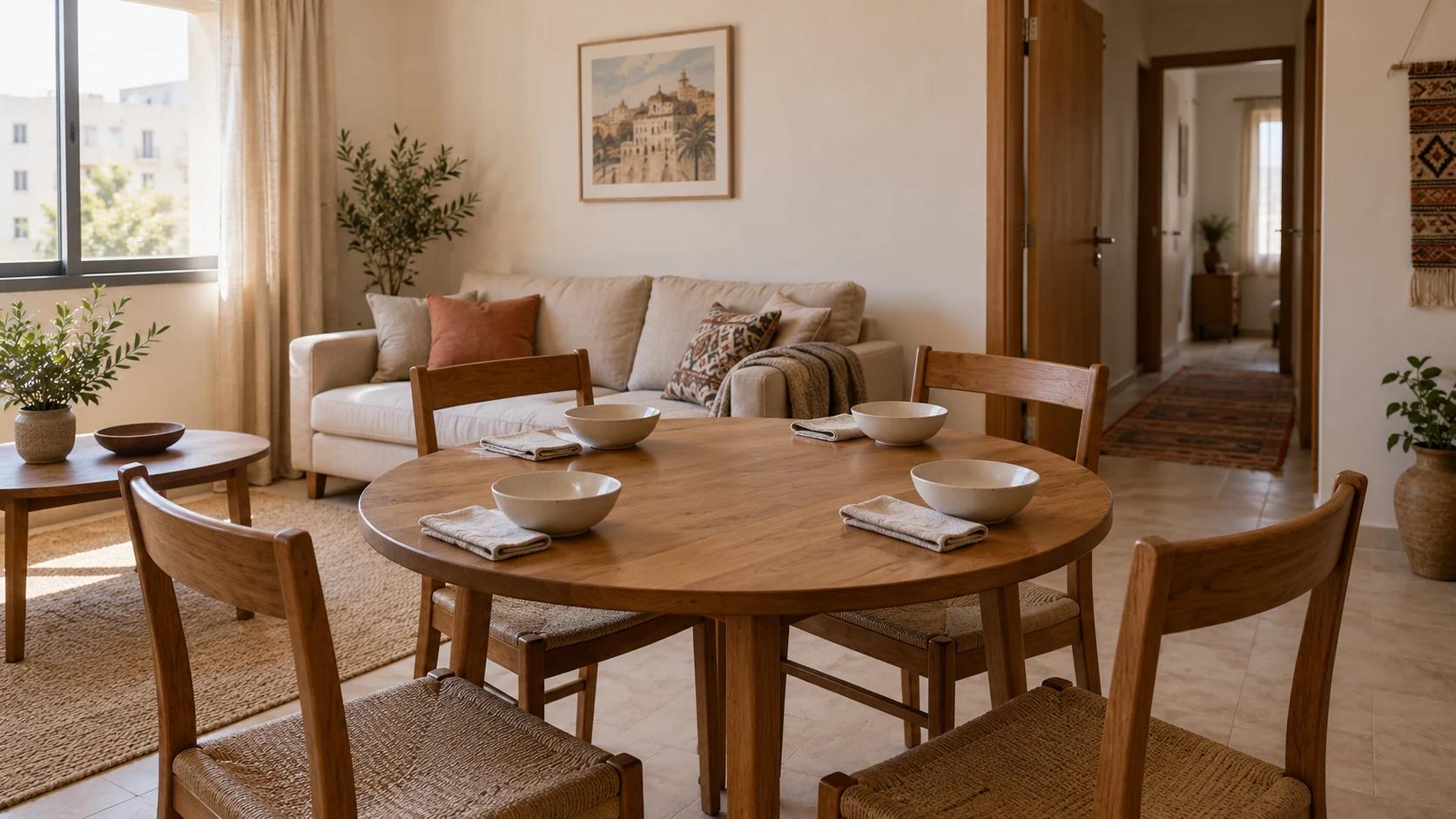
For a family-friendly vacation rental host, preparation starts with a workable sleeping plan, meals, washing, and a clear arrival route. Check the physical space and any children's equipment, explain important limitations before booking, and record the setup agreed for each stay. Useful preparation goes beyond adding toys to a photograph.
This guide helps hosts prepare the actual offer. For the wider steps involved in joining ShamStay, use the Host readiness checklist. Family needs vary with children's ages, mobility, routines, and the adults travelling with them; a general family-friendly label cannot describe all of those needs.
Image note: all three photographs are AI-generated photorealistic editorial images of fictional rooms and an entrance. They are not real ShamStay listings, inspected spaces, or evidence of suitability for a particular child.
What a family-friendly vacation rental host should prepare
Write a short description of the family stay your existing rooms can support. Identify the actual beds, rooms with doors, shared spaces, bathroom access, and meal facilities. Keep the published capacity tied to the real accommodation; adding a travel cot or allowing a child to share does not automatically justify increasing it.
Families travelling with an infant
Consider it for: A plan that identifies an appropriate sleep space, room for the agreed equipment, and practical washing and food-preparation arrangements.
Verify: Infant equipment needs its own suitability, condition, and instruction checks. An ordinary spare bed is not an infant sleep solution.
Families with younger children
Consider it for: Clear room connections, manageable meal routines, and a property-specific review of hazards and access.
Verify: Movement around stairs, windows, outdoor areas, and shared spaces needs attention beyond the headline guest count.
Families with older children or several generations
Consider it for: Clearly described individual beds, privacy, bathroom arrangements, and enough usable dining space.
Verify: Sharing preferences and access needs differ. Ask what setup is required instead of assigning beds from assumptions about the family.
Use these as preparation prompts, not promises that every family in a group will find the property suitable. Identify what you can reliably provide, what needs work, and what is unavailable before buying extra equipment.
Walk through bedtime, breakfast, and washing
Prepare every offered sleeping place in its usable configuration. Open the sofa bed if included, place its bedding, and check whether it blocks a doorway or removes the only shared sitting space. Show which bedrooms connect directly and whether someone must pass through another sleeping area to reach the bathroom.

Consider different bedtimes. Can the adults use the living area without passing through the room where a child is resting? Explain the arrangement and any known noise limitations rather than promising quiet. Check curtains, room lighting, and where guests can put luggage without obstructing movement.
Prioritise family apartment amenities that support ordinary tasks: enough usable tableware, a workable dining arrangement, fridge space, and clear cooking instructions. Follow the host amenities checklist to inventory the actual provision. Describe laundry precisely: a washer, detergent, drying space, and laundry service are separate features. Leave guest storage ready instead of making a family unpack around the owner's supplies.
Resolve hazards before adding family-friendly claims
A child-friendly accommodation checklist needs a walk through the rooms and outdoor areas, with unresolved issues assigned for correction. The US Consumer Product Safety Commission's vacation-rental safety guidance highlights furniture and television anchoring, working smoke and carbon monoxide alarms, fire equipment, secure cleaning-product storage, and pool barriers. Use this product-safety guidance alongside applicable local requirements and qualified advice for the property.
- Inspect the actual guest route, stairs, windows, balconies, and any water features; arrange suitable professional help for faults or uncertain protections.
- Check that relevant furniture and televisions are secured as instructed by their manufacturers, and keep cleaning products locked away from children.
- Check offered safety equipment and its maintenance instructions; make the exit route and emergency information clear.
CPSC's window-covering guidance recommends cordless coverings and keeping beds, furniture, and toys away from windows and cords. Look for concealed cords as well as visible ones. Treat the physical issue as a task to resolve, rather than assuming a warning to parents makes the setup acceptable.
Do not advertise a property as childproof or safe for every age after a visual walkthrough. Record what was checked and what remains unresolved. If an issue makes a space unsafe, correct it before use; describing the problem in the listing is not a substitute for fixing it.
Offer children's equipment only when you can maintain it
A cot, high chair, or other optional item becomes an ongoing responsibility when you offer it. Keep its manufacturer, model, instructions, intended age or size range, cleaning method, and condition in your inventory. Check relevant recall notices and the manufacturer's guidance. Remove damaged, incomplete, or recalled equipment from use instead of improvising repairs or missing parts.
For infant sleep, provide only an appropriate product intended for that purpose and follow its instructions. CPSC's infant sleep guidance advises keeping the sleep space bare apart from a fitted sheet and checking for recalls. Do not add pillows, quilts, toys, or extra padding to make a cot look welcoming. Keep decorative bedroom styling separate from an infant sleep arrangement.
Optional books or games should suit their stated age range, be complete and in good condition, and have a place in the reset routine. A smaller selection you can check between stays is more useful than a cupboard of mixed, unexamined items.
Show the practical limits before a family books
Use current photographs of the real bed arrangement, dining space, bathroom, and entrance. Explain stairs, shared areas, and room connections in the description. The property-description guide helps turn those facts into a clear offer. Avoid letting a wide-angle photograph imply that a folded sofa bed leaves a separate living room available at night.
When you host family guests, distinguish included equipment from items available only after agreement. State relevant costs and conditions through the appropriate listing and booking information. Do not promise free child stays, extra beds, babysitting, transfers, or flexible arrival unless those arrangements are actually part of the offer.
Read your draft alongside the guest-facing family accommodation checklist. Can a parent work out who sleeps where, how meals will work, and what arrival involves? For property hosting in Syria, these concrete details are more useful than repeating a family-friendly label. Update the words and photos whenever the arrangement changes.
Carry the agreed setup through arrival and turnover

Before arrival, confirm the agreed beds, equipment, and access arrangements. Give factual information about steps, the lift if provided, and where a pushchair may be stored without obstructing an exit or shared passage. Do not assume an adult can carry a pushchair and luggage simply because earlier guests did so.
Use the pre-arrival communication guide to keep requests and confirmed arrangements distinct. Ask only for the practical details needed to prepare the stay, such as bed preferences and equipment needs, and keep booking-specific information in the appropriate private conversation.
- Before each arrival: set up the confirmed beds, inspect allocated equipment, and place its instructions where guests can find them.
- After departure: clean and check the family equipment, account for all parts, and remove anything needing attention.
- Before the next booking relies on it: correct unavailable features in the listing and address any existing guest arrangement affected by a change.
When the physical offer and listing agree, follow the ShamStay Host guide for onboarding and review. Family preparation is part of running the stay well; it does not replace the platform's Host and property checks.
Practical answers
Frequently asked questions
Do I need a cot to describe an apartment as family-friendly?
Describe the family arrangements you can actually support and say clearly whether infant equipment is provided. A cot is a specific commitment, not a substitute for accurate bed, room, and access information. Do not imply that an ordinary bed or sofa is suitable for an infant.
Can I count a requested extra bed before arranging it?
No. A request is not a confirmed sleeping place. Establish that the equipment, space, capacity, and any cost support the arrangement, then communicate what is agreed. Keep the published capacity and current bed information accurate.
How should I handle one high chair shared between properties?
Allocate it to a specific reservation, check that its intended use fits the request, and allow time for cleaning and inspection. Keep the instructions with it. Do not promise simultaneous availability to several units or describe a damaged item as ready.
Should I hide entrance steps to keep family photos attractive?
No. Show the real approach and describe steps, lifts, and shared passages accurately. Families need that information to assess luggage, pushchairs, and their own access needs. Attractive interior photographs cannot answer the arrival question.
Source note
This guide uses the following source for its limited external context. Availability, property details, and booking terms come from live ShamStay pages.